Agents in the Enterprise: From Co-Pilots to Co-Workers
LATEST POSTS
Enterprises Are Still Answering the Wrong AI Question

Legacy Modernization Is an Operating Model Problem Before It Is a Technology Problem

I’m a Vikings Fan. Half Spock. Half Fever Dream.

The past two years introduced millions of professionals to AI through copilots—assistants that draft emails, summarize meetings, or suggest code. But copilots still wait for humans to steer. The next wave of enterprise AI will not. It will act.
AI agents combine reasoning, memory, and action within business workflows. They can open tickets, process invoices, generate reports, or orchestrate multi-step processes without constant human prompting.
A digital co-worker differs from RPA bots. RPAs follow scripts; agents learn context. They reason about goals, ask for missing data, and coordinate with APIs and humans. The enterprise challenge is balancing autonomy with accountability—deciding which tasks agents can perform independently, which require approval, and how to audit results.
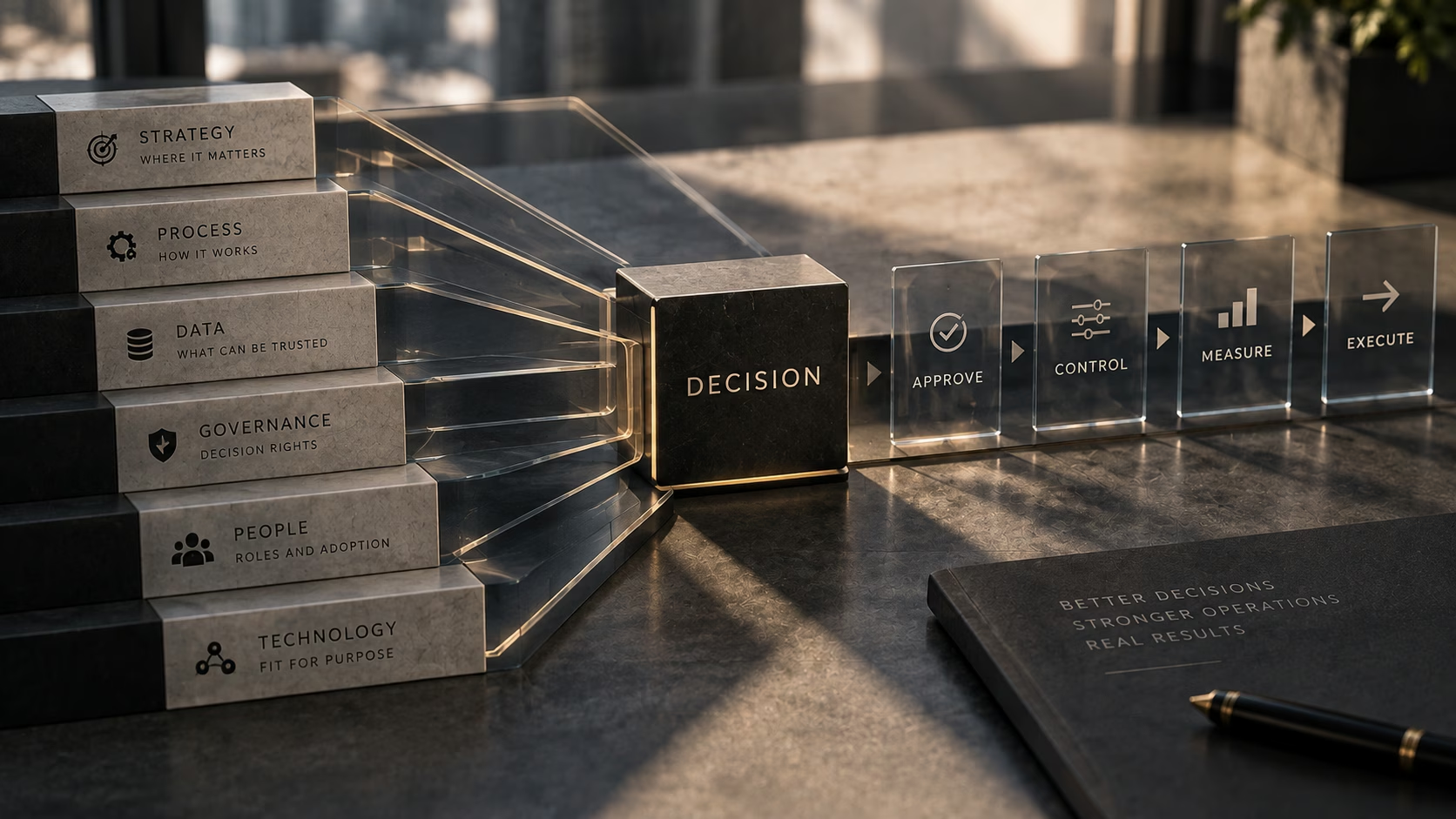
Enterprises must implement “supervision loops.” Each agent should operate inside guardrails—role-based permissions, human-in-the-loop checkpoints, and observable logs for every action. Without these, autonomy becomes chaos.
The temptation is to see agents as digital labor. The opportunity is to treat them as digital partners—augmenting teams, not replacing them. Finance agents that reconcile transactions overnight free analysts to interpret trends. Service agents that resolve 70 percent of Tier-1 tickets let humans focus on empathy and escalation.
Agentic AI isn’t about removing people; it’s about expanding organizational capacity. Enterprises that master supervised autonomy will gain 24/7 execution without sacrificing trust or control.