Legacy Modernization Is an Operating Model Problem Before It Is a Technology Problem
LATEST POSTS
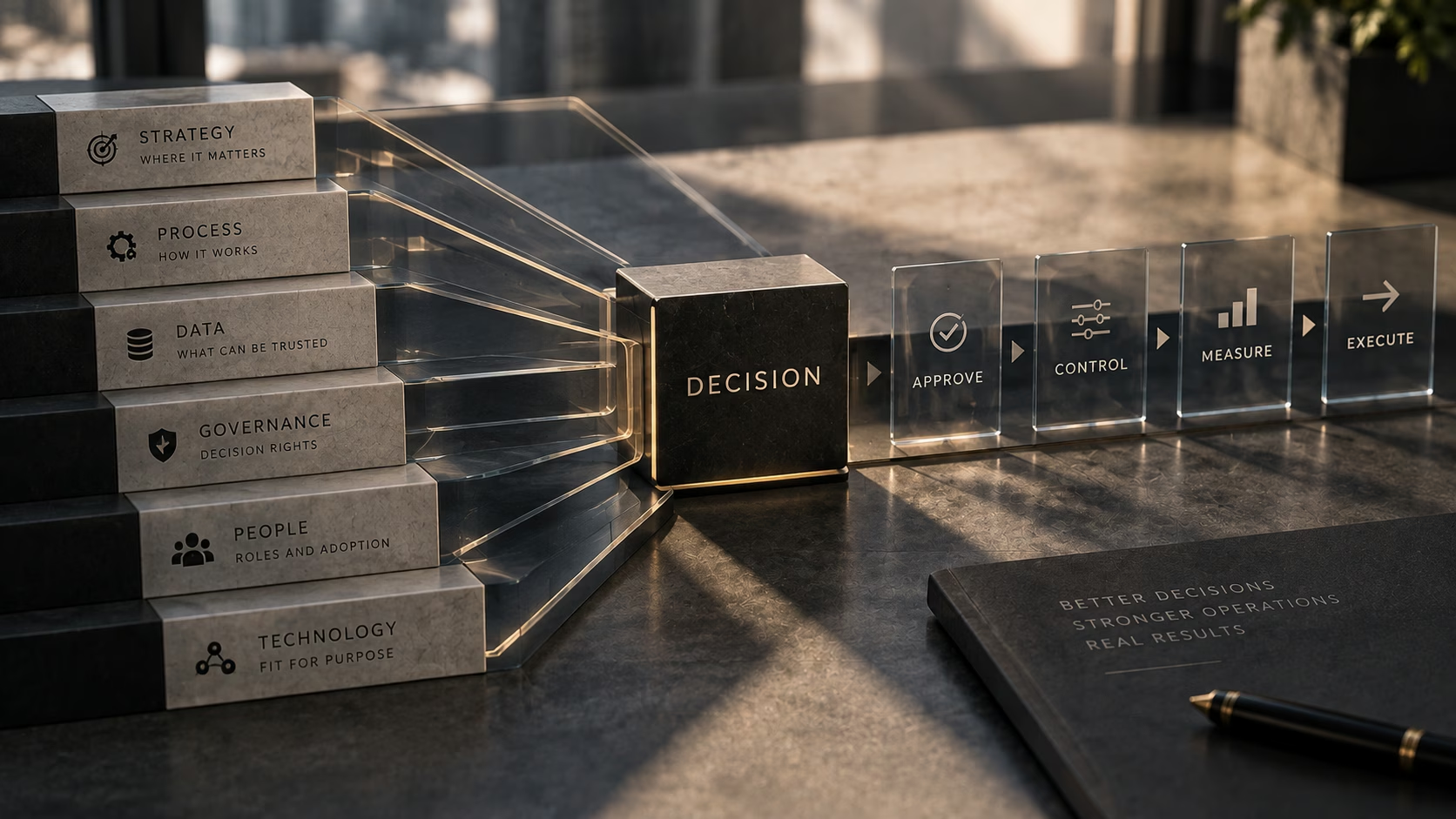
Enterprises Are Still Answering the Wrong AI Question

I’m a Vikings Fan. Half Spock. Half Fever Dream.

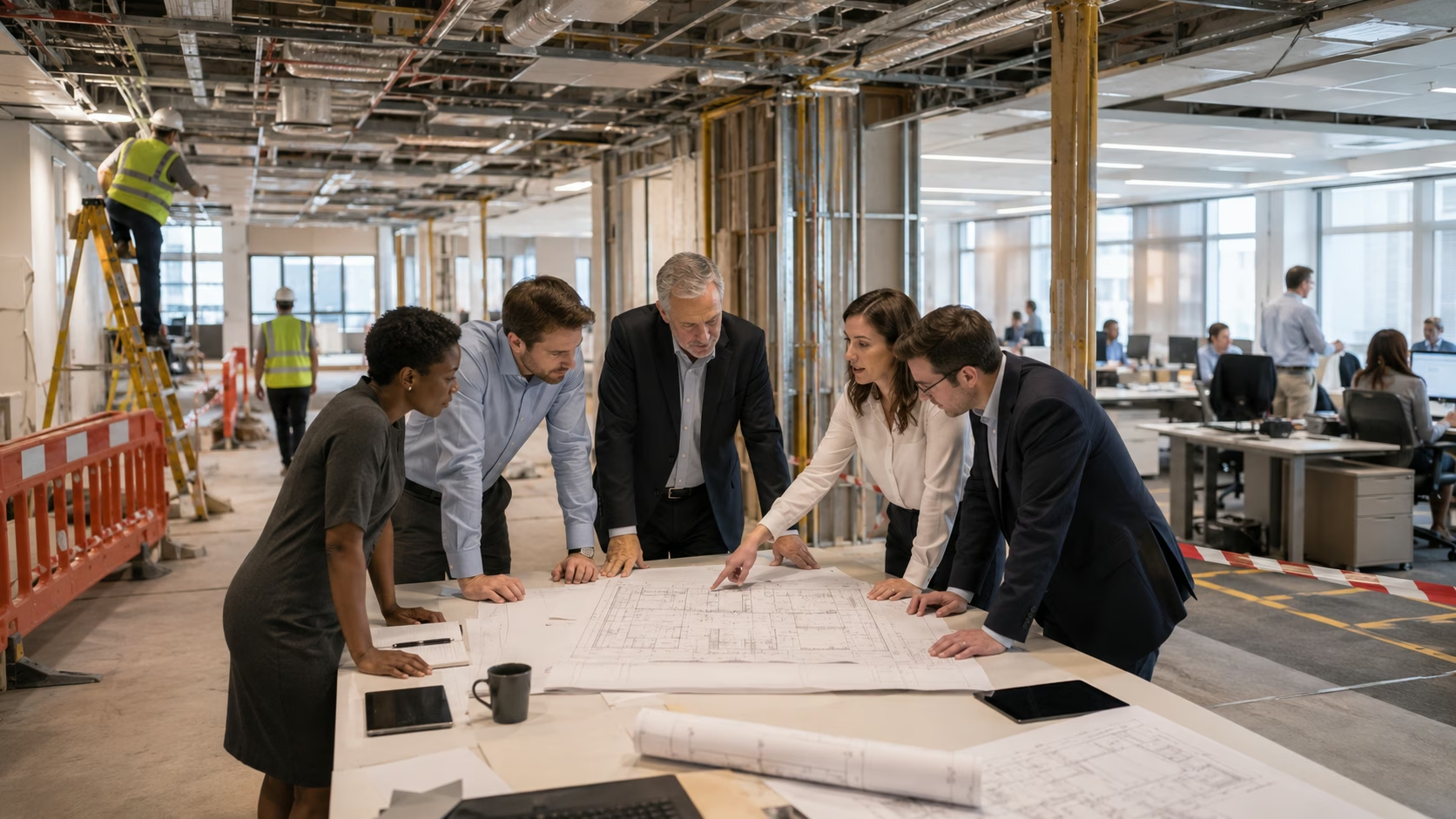
Most modernization programs are scoped as technology projects and then quietly fail as operating model problems. The aging platform is real. So is the brittle integration, the unsupported database, the pile of manual workarounds. But replacing the platform rarely fixes the thing that actually costs you money.
Here is the pattern we see most often. A finance system gets replaced on time and on budget. Eighteen months later, support costs are higher than before go-live, three business units are still exporting data into spreadsheets, and the old system is still running because one regulatory report depends on it. The project hit every milestone. The enterprise got more complex anyway.
That happens because legacy systems are almost never just software.
The system is the smaller half of the problem
A platform that has been running for fifteen years has absorbed the way your organization works. It holds approval logic that lives nowhere else. It supports workarounds that frontline staff invented to keep service moving. Its reporting database feeds executive dashboards, regulatory filings, and a dozen ad hoc spreadsheets that no longer have a clear owner.
So your architecture diagram shows applications, databases, and APIs. Your real dependency map is wider. It includes who touches the system, which controls run through it, which decisions rely on its output, and which manual steps surround it. When you don't understand that map, modernization turns into guesswork. You replace the application but keep the manual approvals. You move the data without resolving who owns it. You migrate reports without asking whether anyone still trusts or needs them.
What you end up with is the same business, relocated onto newer infrastructure, at higher cost.
Replacement without redesign creates a dual-cost trap
The most expensive failure mode is the parallel-run period that never ends.
You are now paying for the new platform, the integration work, the change program, and the new support model. You are also still paying for the old environment, because the dependencies that kept it alive were never closed out. A reporting feed still pulls from it. A business unit refuses to cut over because nobody accounted for its local workflow. An audit control still references the old process.
Picture the numbers. Let's say the legacy estate costs $4M a year to run, and the modernization program adds $6M annually during transition. The business case assumed the $4M would drop to near zero within twelve months of go-live. Instead, eighteen months out, you are still carrying 70 percent of it because four dependencies were never resolved. That gap is not a rounding error. It is the difference between a program that pays back and one that quietly becomes permanent overhead.
This is a sequencing and governance failure, not a vendor failure. The fix is a harder definition of "done." Go-live is not done. Data migration is not done. Done means the old dependency is gone: retirement criteria met, controls revalidated, reporting feeds cut over, and staff operating in the new model without falling back.
Do the unglamorous work before you pick a platform
Platform selection gets the executive attention because it is concrete and easy to present. Operating model design gets skipped because it is messy and slow. That order is backwards.
Before you commit to a replacement, answer a short list of uncomfortable questions:
- Which workflows are you redesigning, and which are you just replicating in a newer tool?
- Which reports are still genuinely decision-critical, and which survive only out of habit?
- Who owns each data domain after migration?
- Which integrations are mandatory, which are temporary, and which are obsolete?
- What does the legacy system need to satisfy before you can switch it off?
Then map dependencies before you set a timeline. You are not trying to produce a perfect diagram. You are trying to surface the handful of dependencies that can blow up your sequencing, inflate your cost, or block retirement. That same exercise tells you where not to start. Some systems are too entangled to go first. Some processes need to be standardized before you automate them. Some data needs an owner before it gets migrated. Sequence the work by operational risk, not by which platform is loudest in the room.
Retirement is a workstream, not an afterthought
Organizations over-invest in implementation and under-invest in shutting the old thing down.That imbalance is where the dual-cost trap comes from.
Retiring a legacy system takes more than moving users. It takes evidence that the business processes have actually transitioned, that reports have been rationalized, that integrations have been replaced or removed, that controls have been validated, and that records have been archived to policy. It also takes someone with the authority to enforce all of that. If business units can keep their local exceptions indefinitely, the old environment stays alive. If nobody owns decommissioning, decommissioning does not happen.
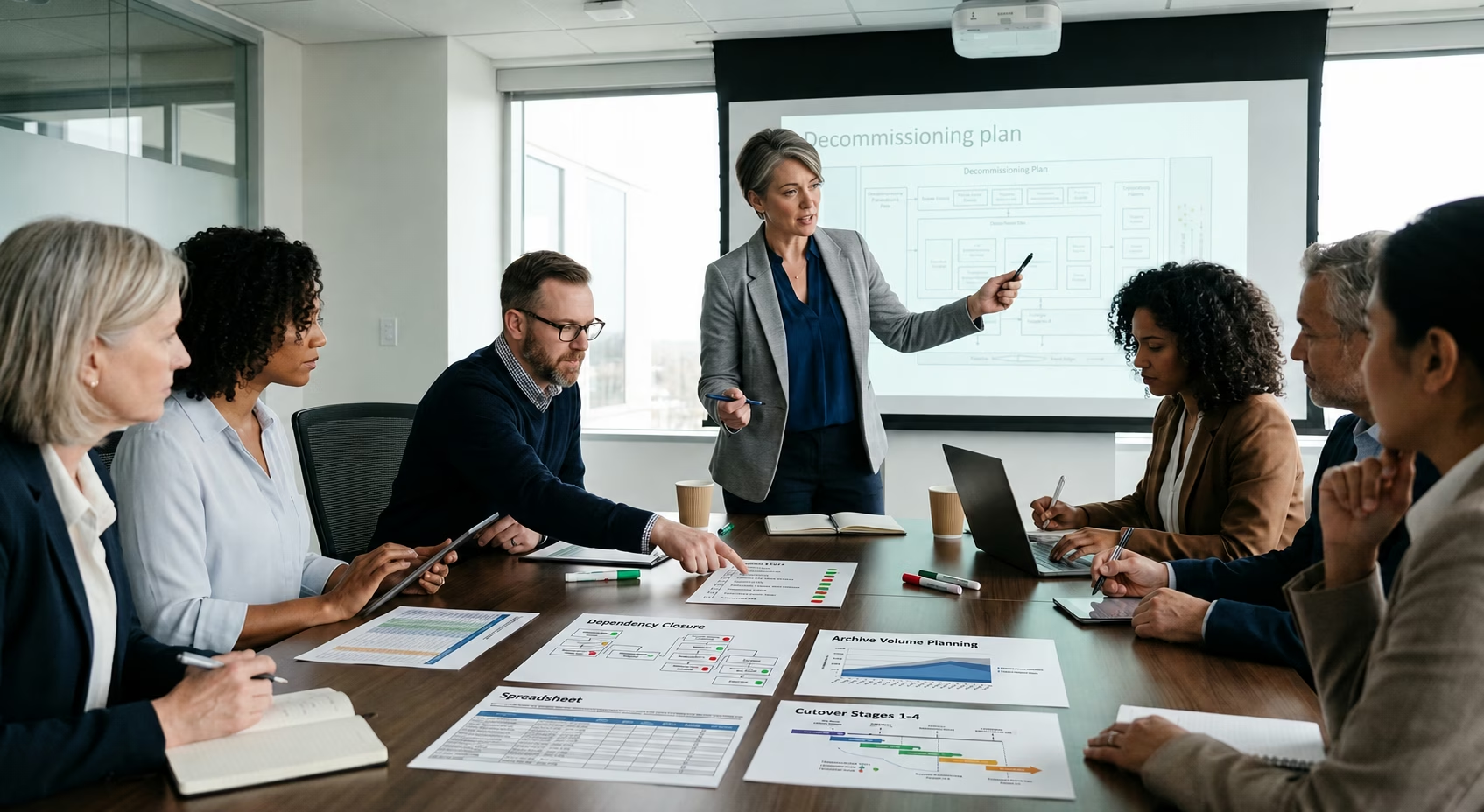
So treat retirement as a managed workstream with an owner, closure criteria, and a tracked list of blockers that get escalated when they stall. Measure progress against the actual reduction in operating burden, not against go-live dates.
Readiness is more than training
The people side of modernization gets filed under "training," which is too small a box. A team can be fully trained on a new platform and still revert to old routines on day three, because the new reporting process does not answer the question the manager actually needs answered. So they keep the spreadsheet.
Real readiness means role design, decision rights, escalation paths, data stewardship, and clear ownership of each control. People need to know how work is supposed to move through the organization now, not just where the buttons are. Change holds when the operating model moves with the technology and not before or after it.
The test that matters
A modern platform sitting on top of unclear ownership, duplicated reporting, and unresolved integrations is not a modern operating environment. It is a fresh coat of paint over the original problem, and it usually costs more.
The honest measure of a modernization program is not whether the old platform is gone. It is whether the organization can finally stop operating around the constraints that kept that platform alive. Understand the operating model before you replace the system. Map the dependencies before you set the dates. Redesign the workflow before you automate it. Validate the controls before you cut over. And retire the old estate with the same seriousness you brought to standing up the new one.
Strategic Systems exists to keep modernization from becoming permanent overhead, by mapping dependencies, sequencing the work by risk, and enforcing retirement until the old cost is actually gone.
That is the difference between modernization as intent and modernization as controlled execution. Programs that skip it do not modernize the organization. They extend the cost of the old one.