The New Stack: From DataOps to ModelOps to AgentOps
LATEST POSTS
Enterprises Are Still Answering the Wrong AI Question

Legacy Modernization Is an Operating Model Problem Before It Is a Technology Problem

I’m a Vikings Fan. Half Spock. Half Fever Dream.
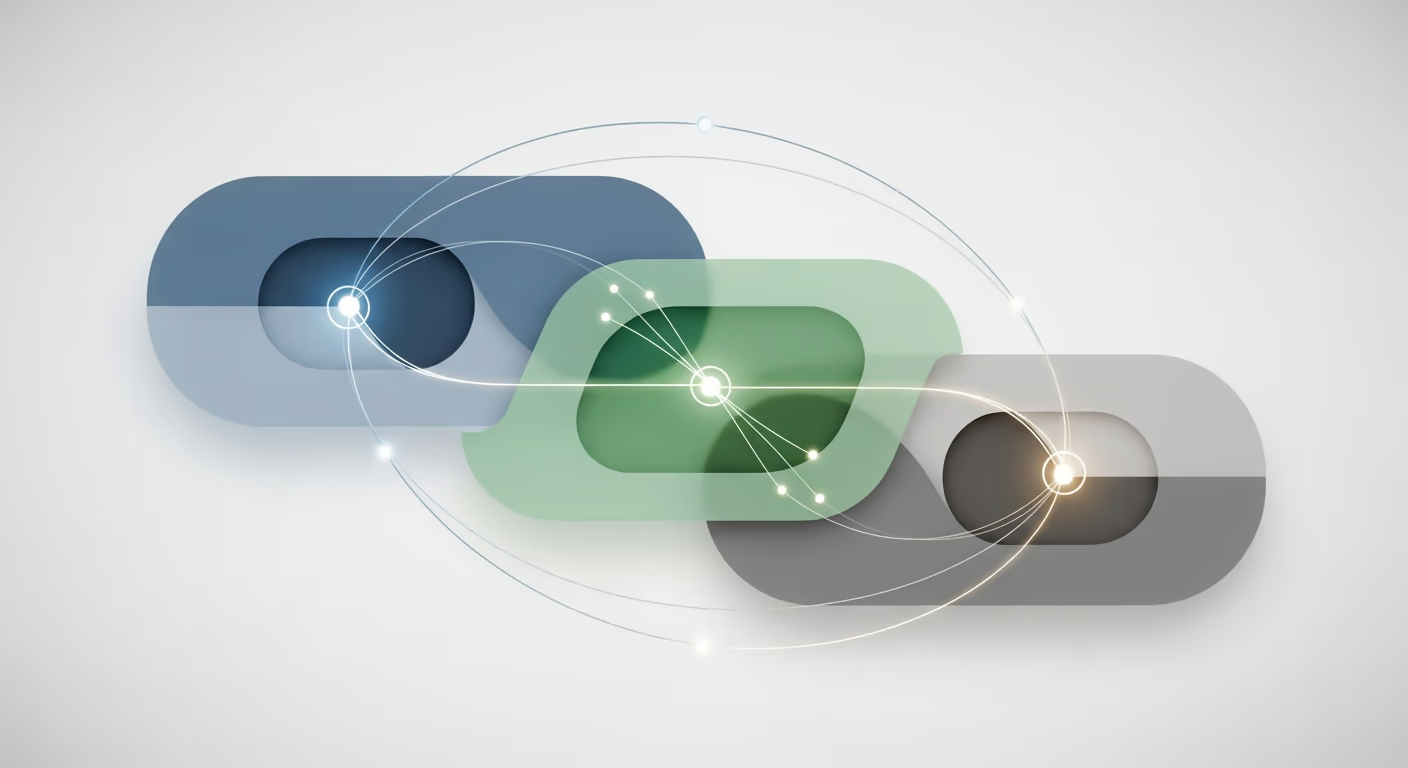
AI transformation isn’t just about smarter models—it’s about operational maturity. The enterprise now runs on a tri-layered stack linking DataOps, ModelOps, and AgentOps into one continuous feedback system.
DataOps ensures clean, governed pipelines. Without it, models learn from noise. It merges DevOps discipline with data stewardship—versioning datasets, automating validation, and enforcing lineage.
ModelOps manages training, deployment, and monitoring. Tools like MLflow or Databricks Model Registry track experiments and automate retraining. Success depends on continuous evaluation—precision, recall, and fairness tracked like uptime metrics.
AgentOps governs autonomous workflows—how agents invoke APIs, coordinate tasks, and learn from results. It defines approval hierarchies, audit logs, and sandboxed environments.
Data feeds models → models inform agents → agents generate new data → data feeds models again. Each cycle improves accuracy and efficiency. Observability platforms close the loop, turning raw activity into insight.
Organizations that connect DataOps, ModelOps, and AgentOps form a living infrastructure—a self-learning enterprise where improvement is built into the workflow itself.