The Future Organization: Building the AI-First Enterprise
LATEST POSTS
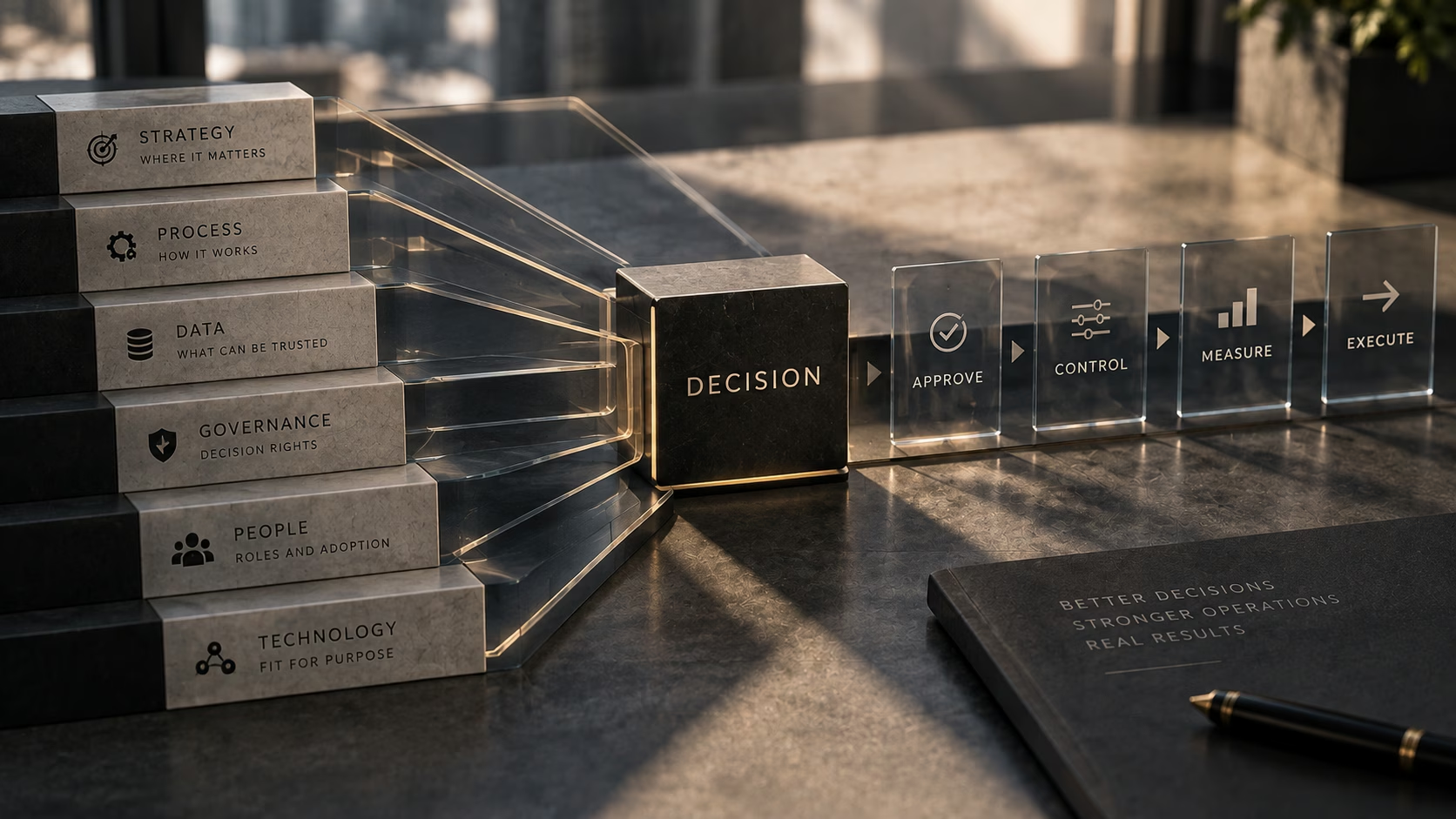
Enterprises Are Still Answering the Wrong AI Question

Legacy Modernization Is an Operating Model Problem Before It Is a Technology Problem

I’m a Vikings Fan. Half Spock. Half Fever Dream.

AI is not a department; it’s an operating model. The AI-first organization treats learning, adaptation, and automation as core management functions.
Digital-first companies digitized existing processes. AI-first companies redesign them for cognition—systems that observe, decide, and act.
AI Councils oversee governance and investment. Human-AI Orchestrators bridge business context with technical capability. Chiefs of Automation coordinate cross-functional initiatives. HR redefines roles around augmentation, not replacement.
An AI-first culture rewards curiosity and data-driven experimentation. Training is continuous literacy. Employees learn to question model output as naturally as they once checked spreadsheets.
Leaders move from control to coordination—guiding dynamic systems instead of static hierarchies. Success is measured by how quickly the organization learns.
AI-first is not a technology strategy; it’s a transformation philosophy. Organizations that build learning into their DNA—across people, processes, and platforms—will define the next decade of enterprise leadership.