AI Security: Protecting Models, Data, and Decisions
LATEST POSTS
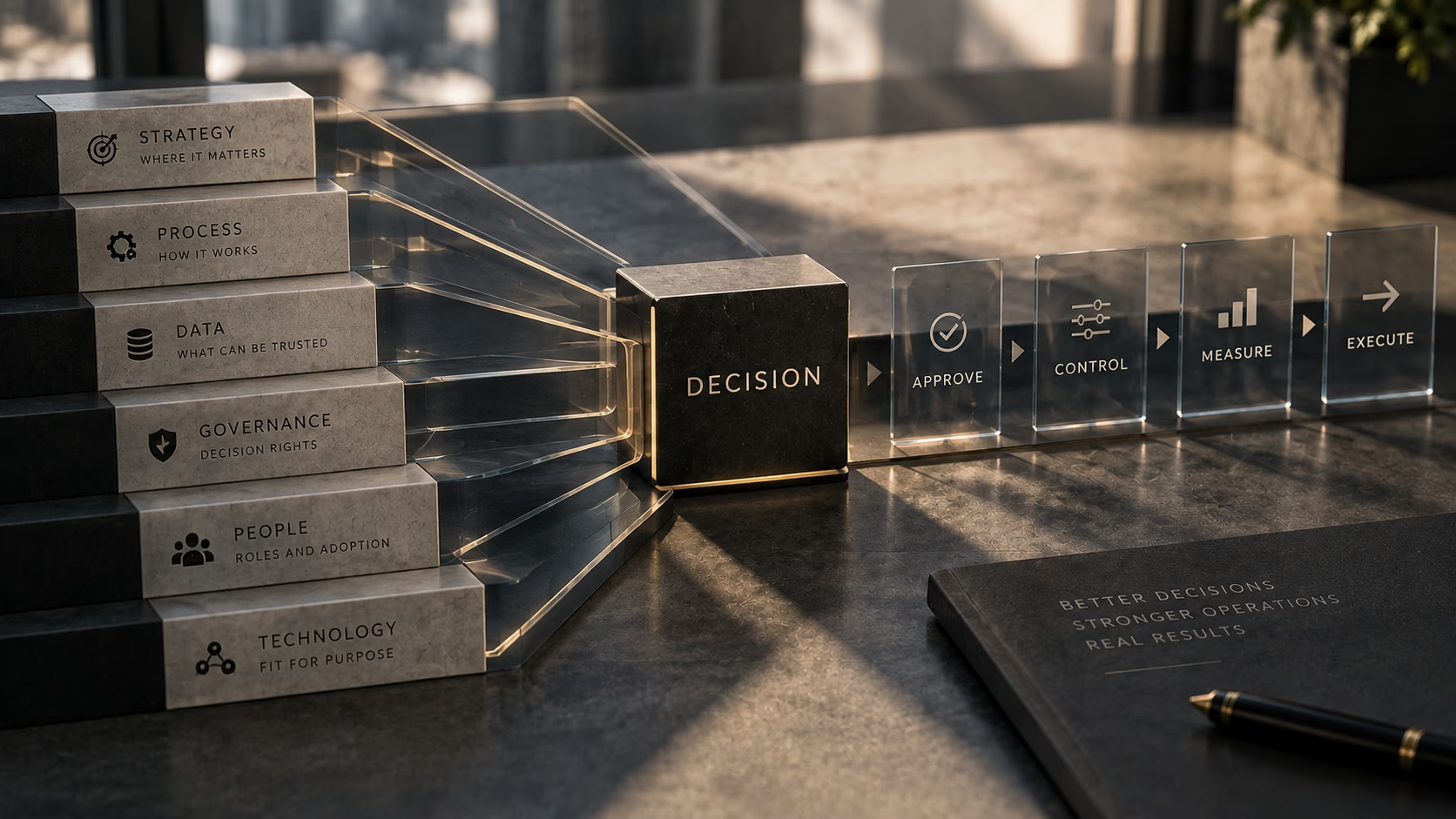
Enterprises Are Still Answering the Wrong AI Question

Legacy Modernization Is an Operating Model Problem Before It Is a Technology Problem

I’m a Vikings Fan. Half Spock. Half Fever Dream.

As AI becomes operational, its attack surface expands. Hackers no longer aim only at data—they target cognition itself.
The new threat landscape includes:
- Prompt injection – manipulating inputs to bypass filters.
- Model poisoning – embedding hidden bias in training data.
- Model exfiltration – extracting proprietary weights or embeddings.
- Output hijacking – altering responses in transit.
Traditional InfoSec protects networks; AI security protects reasoning. Provenance tracking, signed checkpoints, and encrypted embeddings ensure model integrity. Isolation layers prevent one compromised agent from contaminating others.
Regulators are responding. NIST’s AI RMF, ISO 42001, and the EU AI Act define standards for testing and transparency. Enterprises must integrate these into DevSecOps pipelines, treating model validation like code review.
Never trust a model—always verify. Each inference request should authenticate both requester and model version, log decisions, and detect anomalies in real time.
In the agentic era, security is governance. Trust is earned not by perfect accuracy but by provable accountability.